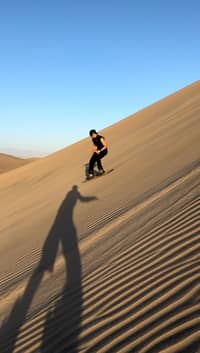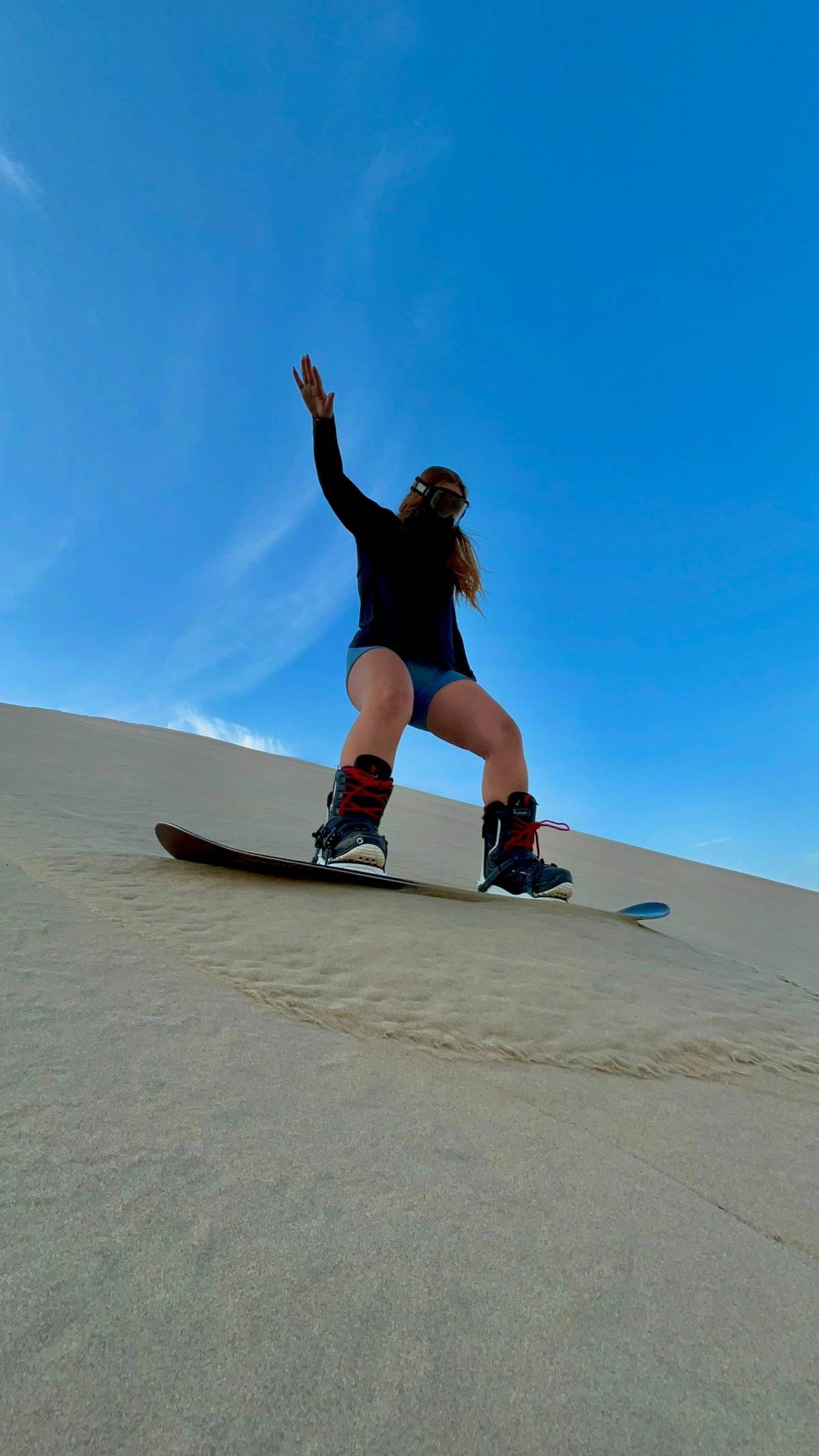
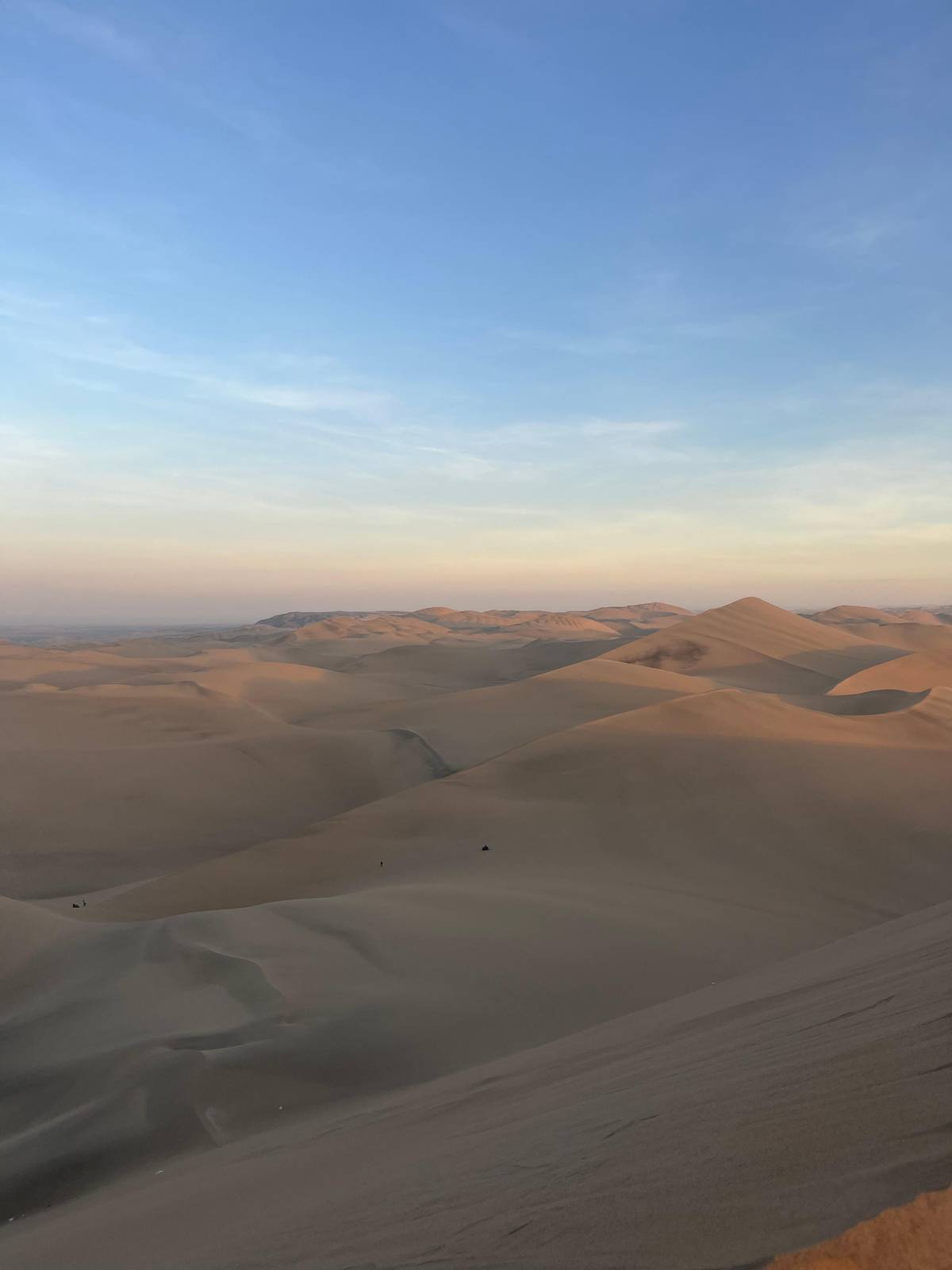
 Warmest
January to April
The hot months
- High
- 31.9 to 33.4 °C
- Low
- 15.5 to 18.7 °C
- Best for
- Long sunsets
Guides
Language
EnglishCurrency
US dollar · $On GetYourGuide you see prices in this currency.
Guide · Weather
Hot, dry and bright for most of the year, with cool evenings in the southern winter. The Huacachina temperature month by month, from the weather station in the Ica valley, and what it means for the dunes.
Editorial team, huacachina-sandboarding.comUpdated October 26, 2026read in 6 minutes20 sources
The nearest long-term weather record for the oasis comes from San Camilo, a station of Peru's national weather service SENAMHI in the Ica valley at 407 m, about 6 km from the lagoon.21 Its 1991 to 2020 normals put the warmest month in March, with a mean daily high of 33.4 °C, and the coolest in July, with 25.2 °C.4
Nights move further than days. The mean daily low at San Camilo falls from 18.7 °C in February to 10.3 °C in July.5 In the southern summer the evenings stay warm enough for a T-shirt on the dunes; in the winter months you will want a fleece or a light jacket once the sun goes down.
PromPeru gives the oasis a range of 23 °C minimum and 32 °C maximum in its own summary.6 That matches the daytime highs of the hot season, though the station's nights are cooler. The station figures show the whole year, including the cooler months from May to October, when the daytime highs sit between about 25 °C and 29 °C.4
A summer day
Sunrise
The best light for a walk on the dunes.7
Mid-morning
Boats on the lagoon before the heat peaks.
Midday
Shade, water and lunch by the lagoon.
Late afternoon
The sunset outings head out onto the dunes.
Sunset
One of the most photographed moments here.8
Night
A warm layer for the walk home.
Rain barely registers here. San Camilo records 10.6 mm of precipitation in a whole normal year, and the wettest month is January with 5.1 mm.2 Most months see well under a millimeter: 0.1 mm in May, September and October.1
The lagoon is the exception in a dry land. Its water comes from underground seepage, not from rain, and once gave the place a reputation for healing waters.9 Around it, the desert stays dry all year, and the dunes are as rideable in July as in January.
The station's normals give no count of rainy days, and we do not invent one. For planning, the rule is simple: you can leave the umbrella at home at any time of year. Pack for sun and for cool evenings instead. The dry air has a second effect worth knowing: lips and skin dry out quickly, and a lip balm and a moisturiser earn their place in the daypack next to the sunscreen.
Daytime highs
Month by month
| Month | Daylight (h) | Darkness (h) | High / low | Wet days | On the dunes |
|---|---|---|---|---|---|
| Jan | 12.9 | 11.1 | 32 / 18 °C | - | Hot days |
| Feb | 12.6 | 11.4 | 33 / 19 °C | - | Hottest |
| Mar | 12.2 | 11.8 | 33 / 18 °C | - | Hottest |
| Apr | 11.8 | 12.2 | 32 / 16 °C | - | Hot days |
| May | 11.5 | 12.5 | 29 / 12 °C | - | Warm days |
| Jun | 11.3 | 12.7 | 26 / 11 °C | - | Mild days |
| Jul | 11.4 | 12.6 | 25 / 10 °C | - | Mildest |
| Aug | 11.6 | 12.4 | 26 / 10 °C | - | Mild days |
| Sep | 12 | 12 | 28 / 11 °C | - | Warm days |
| Oct | 12.4 | 11.6 | 29 / 12 °C | - | Warm days |
| Nov | 12.8 | 11.2 | 30 / 13 °C | - | Hot days |
| Dec | 12.9 | 11.1 | 31 / 16 °C | - | Hot days |
SENAMHI's San Camilo station in the Ica valley, about 6 km from the lagoon, 1991 to 2020: WMO normals of the mean daily high and low. The normals give no count of rainy days, so the wet-days column stays empty. The hours of daylight are our own sum for the lagoon's position, taken at mid-month.1 Season according to PromPeru.3
Three seasons
WarmestThe hot months
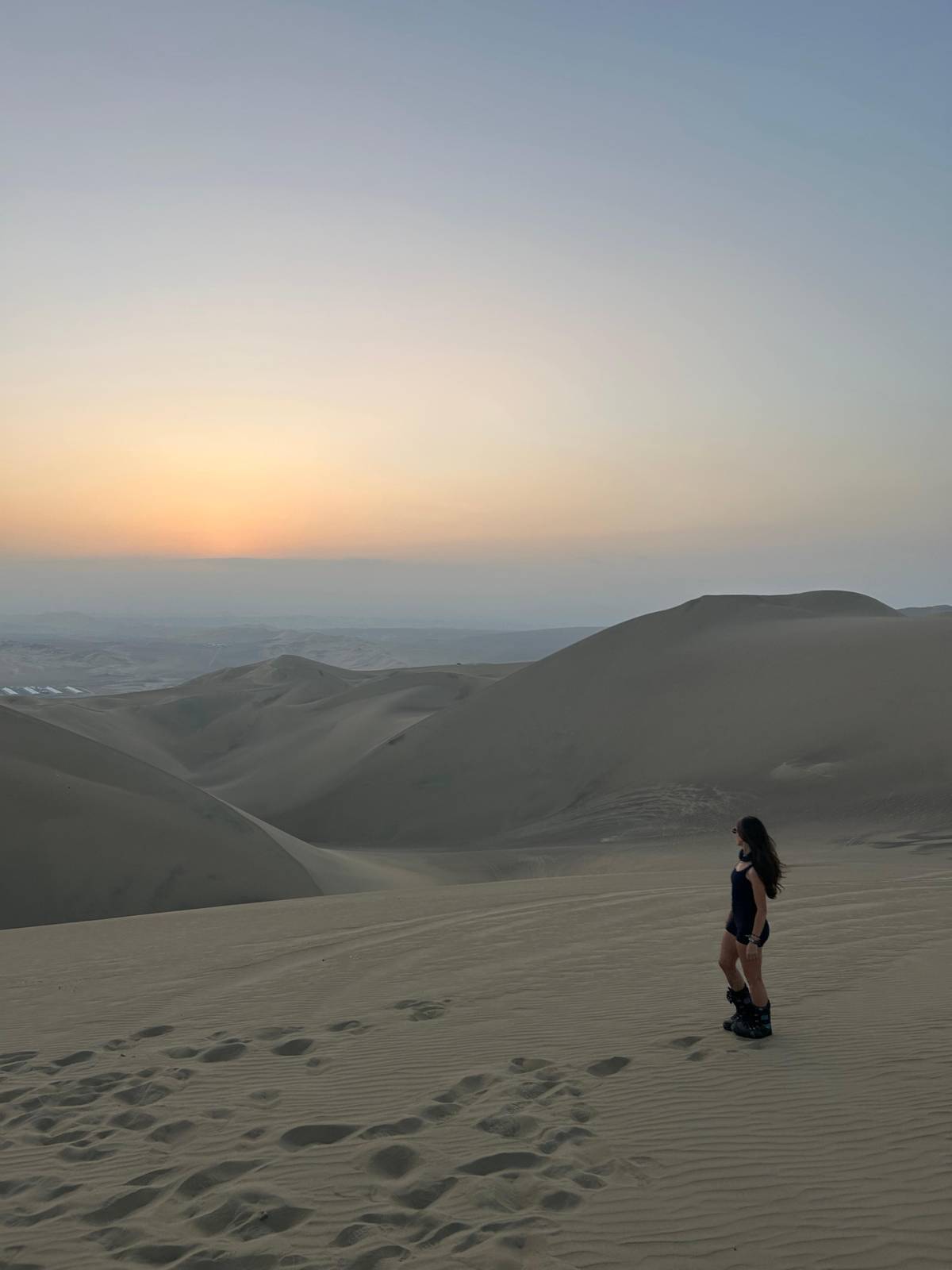 In between
Warm days, cooler nights
 Coolest
The southern winter
Decision helper
Match the month to what you want from the trip
Mean daily highs of 33 °C in February and 33.4 °C in March.1
Ica has celebrated it every March since 1958.10
Highs of 25.2 °C to 27.8 °C on the station record.4
PromPeru's recommended months for the reserve.11
July and August are the busy months, with dawn fog.12
The best time to visit this charming destination is between February and March, when temperatures are warmer. However, Huacachina is an excellent destination to visit at any time of the year.
PromPeru names February and March as the best time to visit Huacachina, when temperatures are warmer, and adds that the oasis is an excellent destination at any time of the year.3 Those are the hottest months on the station record, with mean daily highs of 33 °C and 33.4 °C.1
March also brings the International Grape Harvest Festival in Ica, celebrated every year since 1958, with more than a week of parades, Paso horse shows, grape stomping and music.1013 Hotels fill up during the festival, and PromPeru advises booking ahead.14
If heat is not your thing, the cooler months suit long days on foot. With highs of 25.2 °C to 29.2 °C from June to October, the dunes are easier to climb in the afternoon, and the sunset sessions are pleasant rather than sweaty.4 Bring warm layers for the evenings, when the mean low drops to 10.3 °C in July.5
Checklist
Cost calculator
Enter your group size to compare three sunset outings.
Total from$95
pp from $48
Check availabilityfree cancellationThe total is each outing's from-price on its booking site multiplied by your party, converted at the day's ECB rate; the checkout shows the final amount.
Video
The video starts loading once you tap play.
December to March is the southern summer. Mean daily highs run from 31 °C in December to 33.4 °C in March, and the nights stay warm, with lows between 15.6 °C and 18.7 °C.1 This is shorts-and-sunscreen weather from morning to night, and the hot hours around noon are best spent in the shade by the water.
April and May bring the turn. April still averages a high of 31.9 °C, but the low drops to 15.5 °C, and by May the figures are 29.2 °C and 12.4 °C.1 Afternoons on the dunes become comfortable, and the evenings at the bonfire call for long sleeves.
June to September is the coolest stretch, with highs of 25.2 °C to 27.8 °C and lows of 10.3 °C to 10.9 °C.45 October and November warm up again, to highs of 29.2 °C and 30 °C.1 Any of these months suits the dunes; only the layers in your bag change.
Huacachina lies well inside the tropics, and the length of the day changes little. By our own calculation for the latitude of the lagoon, the sun is above the horizon for 12.9 hours in mid-January and 11.4 hours in mid-July.1 Either way, the sun sets early enough for a full evening after the ride.
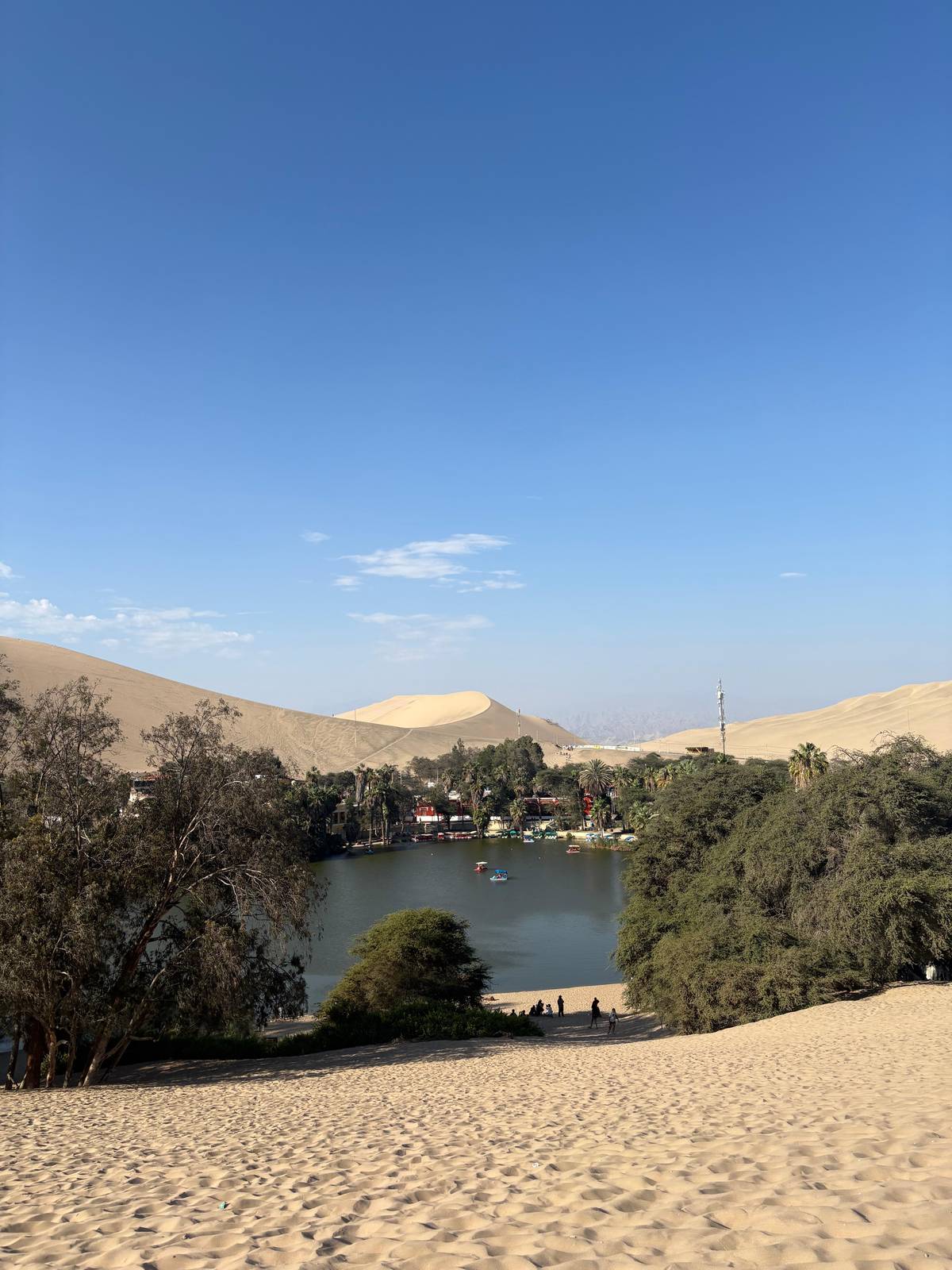
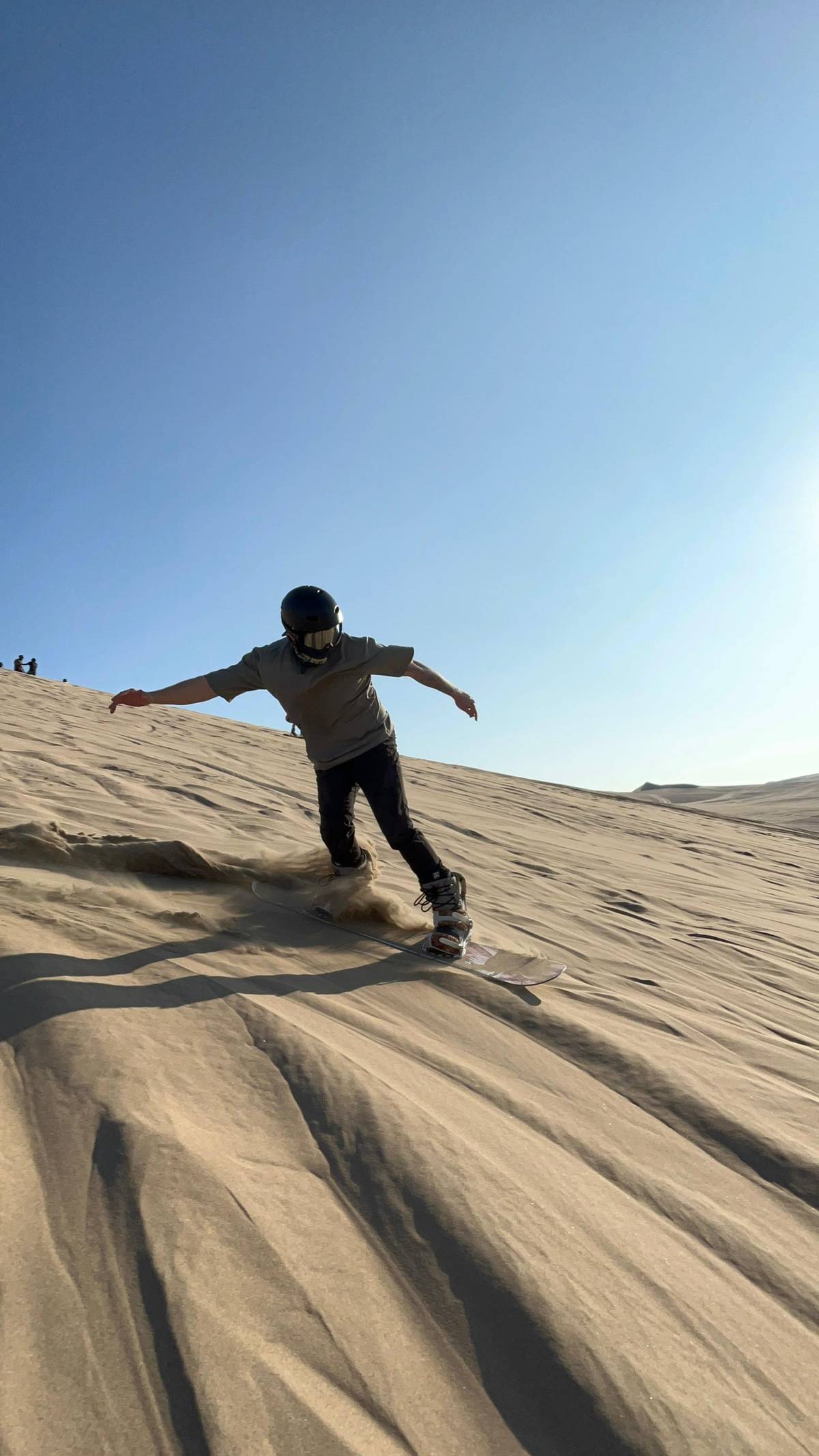
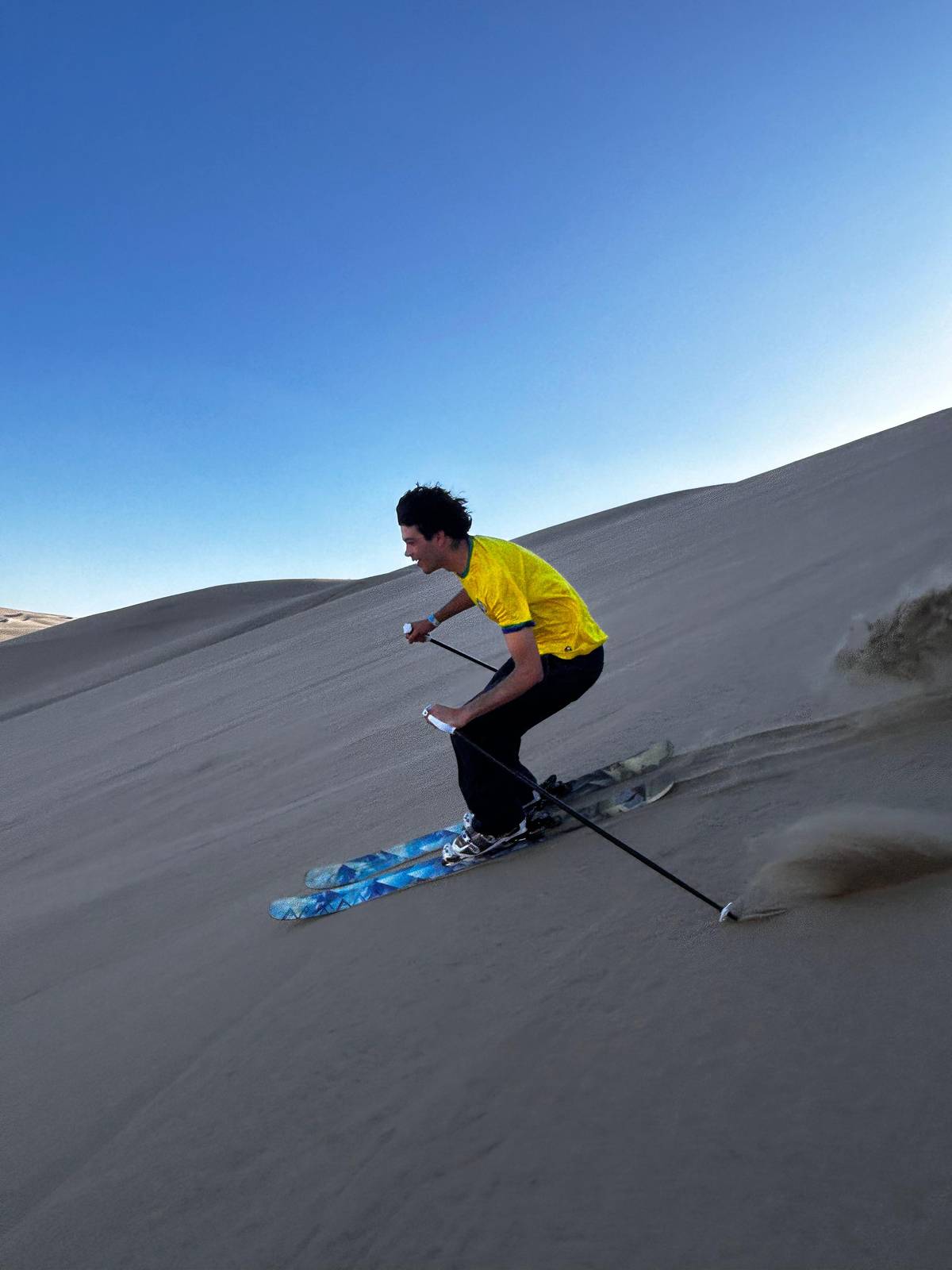
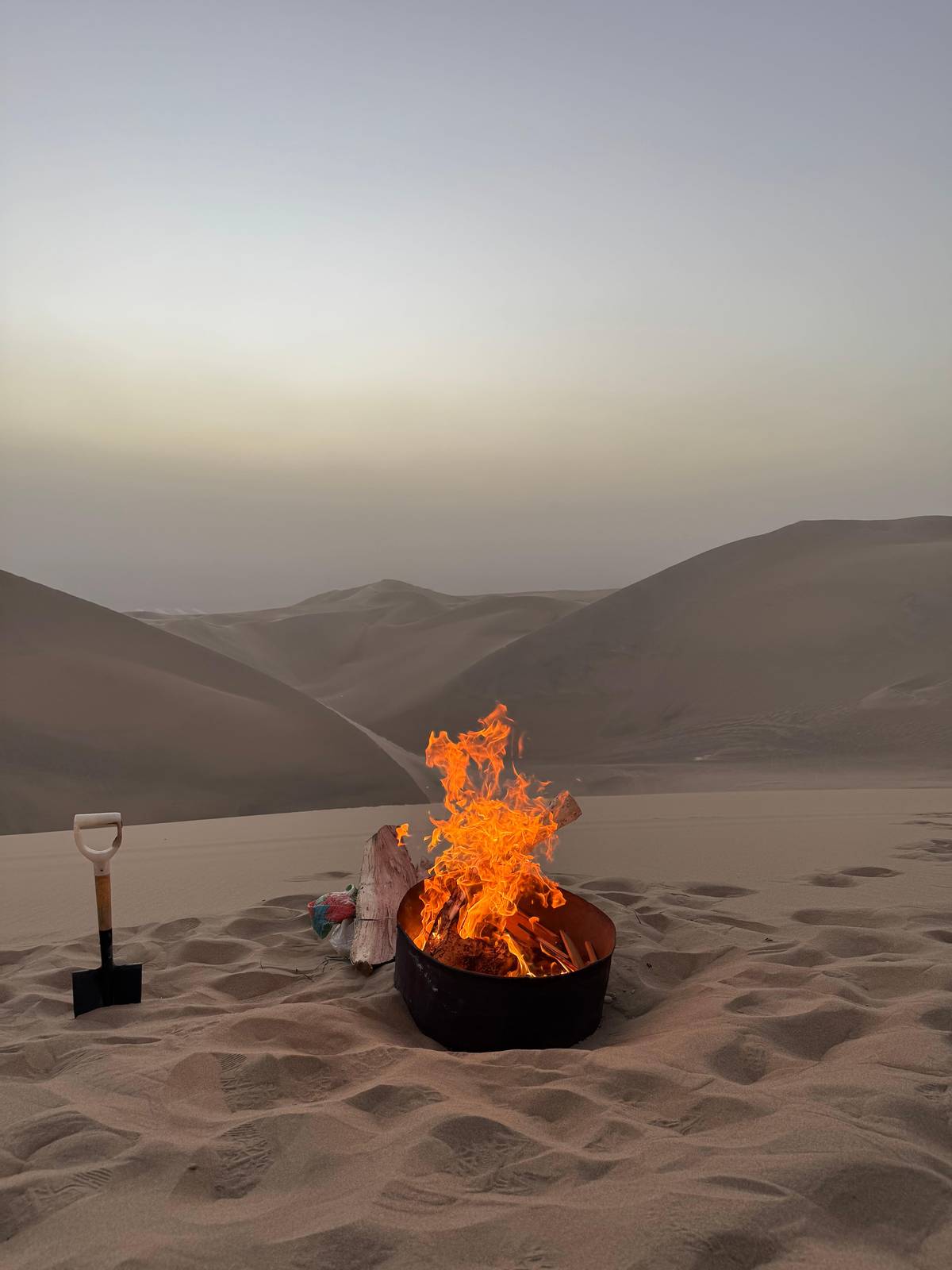
Sunset from the top of the dunes is one of the most photographed sights of the oasis, and the low sun is when the sand shows its colors.87 The sandboard and sandski evening this site recommends is built around that hour, with a bonfire, snacks and cocktails as the light fades.
Twilight is short this close to the equator. Once the sun touches the horizon, darkness follows quickly, and the temperature falls with it. Keep a layer in your daypack even in summer, and have a light ready for the walk back across the sand.
The sand heats up fast in the strong sun, and the middle of the day is the wrong time for a long climb. PromPeru's essentials for the area include sunscreen, walking clothes, warm-weather gear, a windbreaker jacket and cash.15 The site tour adds sunglasses, water and drinks to its own list of things to bring.
Plan your active hours for the morning and the late afternoon. PromPeru recommends walking the dunes at sunrise or sunset, when the sun changes the colors of the landscape, and the temperature is far kinder then.7 Spend the middle of the day in the shade by the lagoon or on a boat.16
Drink more than you think you need. In the dry air you lose water without noticing it, and the climbs on soft sand are hard work. A bandana over the mouth and nose helps on windy afternoons when the sand blows; the site tour includes goggles and a bandana with its helmet.
The coast nearby has its own climate. PromPeru gives Paracas a range of 18 °C to 23 °C and recommends visiting between December and April, the summer months.1711 SERNANP describes the reserve's summers as hot and its winters as long, cool, dry, windy and mostly clear.18
Take a windbreaker on the Ballestas boat: it is cooler by the sea, above all in the morning.19 That is true even when the oasis bakes in the afternoon heat the same day. A day trip that starts with the boat and ends on the dunes asks for layers you can peel off as you go: a jacket at the pier, a T-shirt in the vineyard, and the jacket again once the sun has set over the sand.
For the Nazca flight, July and August are the high season, and dawn fog often delays the first flights in those months.12 In bad weather a flight is cancelled, and companies offer to wait and fly later the same day or move it to the next day.20 Plan a little slack around a Nazca day in the southern winter.
Your sunset
Pick a date, get collected in Huacachina or Ica, and cancel free up to 24 hours before.
Highs of 25.2 °C to 33.4 °C by month. Those are the 1991 to 2020 normals of SENAMHI's San Camilo station near Ica, from July to March.4
February and March, says PromPeru. Those are the warmest months, and the tourism board calls the oasis a good destination all year.3
Hardly ever. The station records 10.6 mm of precipitation in a whole normal year, most of it in January.2
About 10.3 °C in July. The mean daily low at San Camilo is 10.3 °C in July and 18.7 °C in February.5
Light clothes and a warm layer. PromPeru lists sunscreen, walking clothes, warm-weather gear and a windbreaker jacket.15
Yes, and cooler. July averages a high of 25.2 °C; bring a jacket for the evening, when the low is 10.3 °C.1
From 11.4 to 12.9 hours. By our calculation the sun is up 12.9 hours in mid-January and 11.4 hours in mid-July.1
Sources
Keep reading